- Feb 26
What Works for DLD and Dyslexia
- Britney | Language and Literacy Clinic of Manitoba
- 0 comments
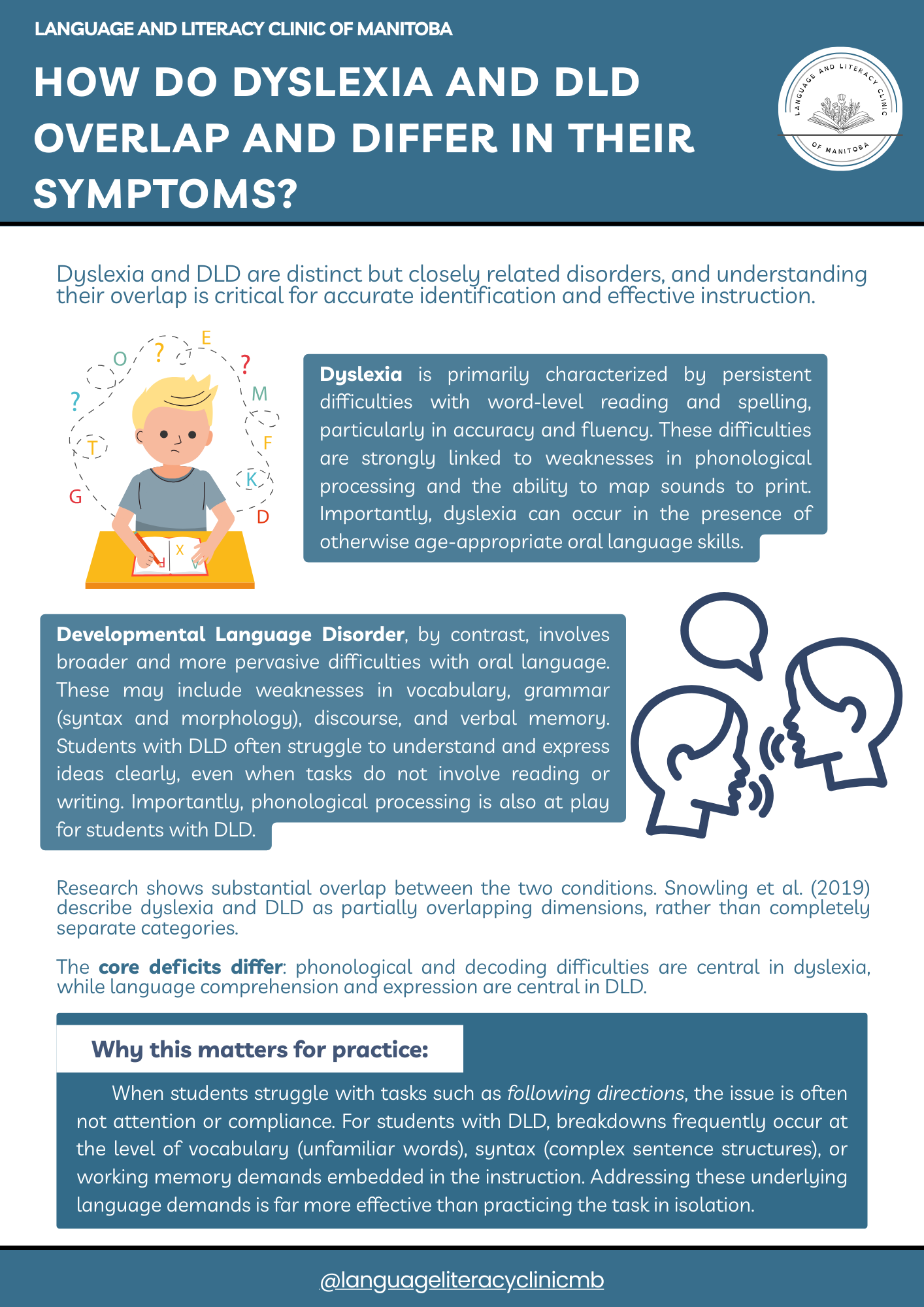
Educators and clinicians often work with students whose reading, writing, and learning difficulties do not fit neatly into a single category. Developmental Language Disorder (DLD) and dyslexia are two of the most common neurodevelopmental disorders affecting academic achievement, and they frequently co-occur. When instruction is not aligned with what we know from research, students are often given broad, inefficient goals (for example, “following directions”) rather than support that targets the underlying language and literacy skills that are actually breaking down.
What Are the Long-Term Effects of Early Oral Language Difficulties on Literacy Skills?
Early oral language skills form the foundation for later reading and writing development. Longitudinal research consistently shows that children with early language difficulties are at increased risk for ongoing academic challenges.
Snowling et al. (2019) report that students with early language weaknesses often show persistent difficulties in reading comprehension, written expression, and broader academic achievement, even if early word-reading skills appear adequate. Vocabulary knowledge, grammatical understanding, and narrative skills all contribute to a child’s ability to make sense of text as academic demands increase.
Similarly, reviews of academic outcomes for students with DLD indicate that language difficulties do not simply “resolve” with time. Instead, gaps often widen as instruction becomes more language-dense and less explicit (Ziegenfusz et al., 2022). By the upper elementary and secondary years, students are expected to learn through language: listening to explanations, reading complex texts, and expressing knowledge in writing, which can make unresolved language weaknesses increasingly costly.
Why this matters for instruction:
Waiting for language skills to improve naturally places students at risk. Early, explicit instruction in vocabulary, sentence structure, and oral language comprehension supports not only spoken language, but also later reading comprehension and written language.
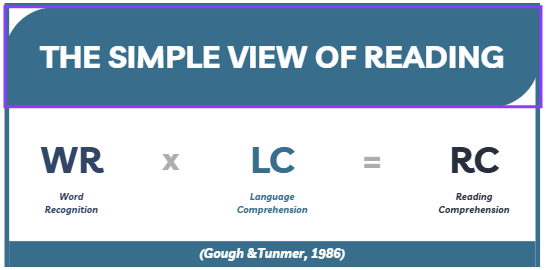
Reading comprehension relies on the integration of multiple skills. According to the simple view of reading, comprehension is the product of decoding and language comprehension. When both are compromised—as in comorbid DLD and dyslexia—students face compounded challenges.
Snowling et al. (2019) found that students with comorbid DLD and dyslexia show more severe and persistent reading comprehension difficulties than those with dyslexia alone. While students with dyslexia may improve decoding accuracy over time, those with underlying language impairments often continue to struggle with understanding text due to weaknesses in vocabulary, syntax, and inferencing.
Ziegenfusz et al. (2022) similarly report that students with DLD demonstrate lower achievement across academic domains, with reading comprehension particularly affected. These difficulties are not explained solely by decoding ability, highlighting the central role of oral language in making meaning from text.
Key implication:
Improving decoding alone is not sufficient for students with comorbid profiles. Instruction must explicitly address language comprehension alongside word-reading skills.
Classroom and Intervention Application
In the classroom:
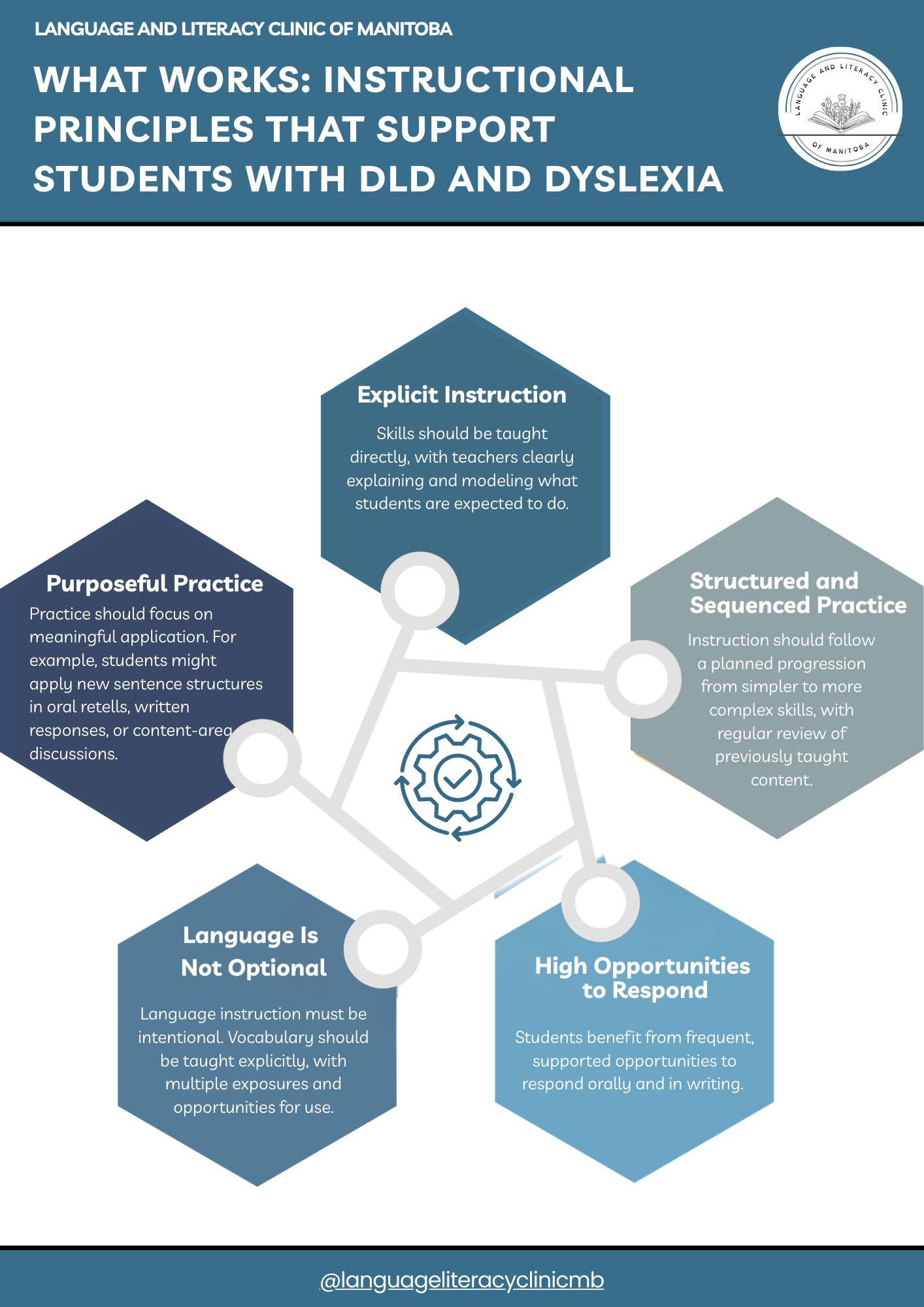
Pre-teach key vocabulary before reading or listening tasks.
Break down complex directions and make sentence structures explicit.
Teach students how to unpack sentences in text, focusing on subjects, verbs, and relationships between ideas. Students cannot be expected to understand or create paragraph or multi-paragraph text if they don’t have solid understanding at the sentence level.
Focus on sentence combining and sentence expansion for the biggest bang-for-your buck.
Build in structured oral language practice during lessons, not just during intervention time.
Intervention:
For students with identified DLD, intervention should target language form and meaning directly, while incorporating classroom content.
Progress monitoring should include measures of language growth, not only reading accuracy or fluency.
Final Thoughts
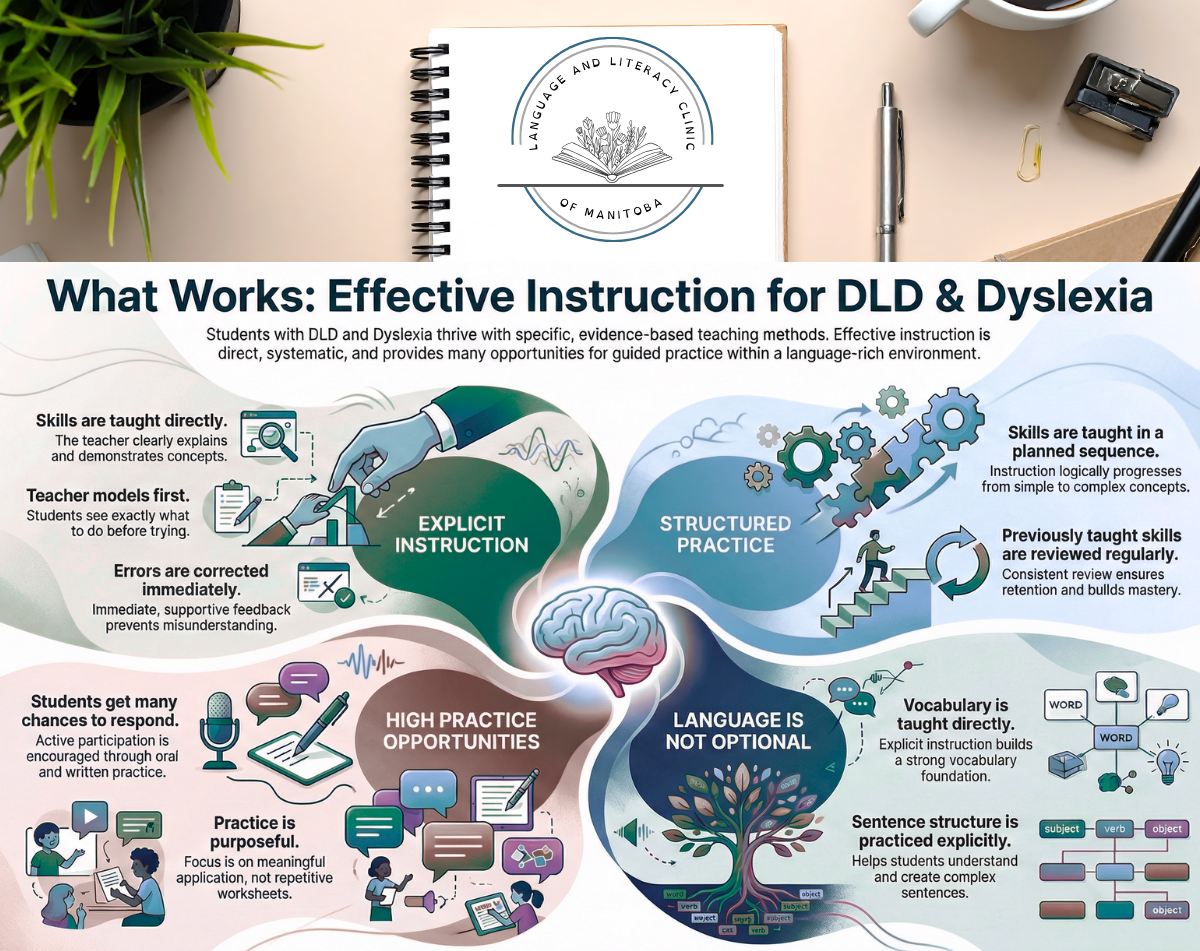
DLD and dyslexia are common, overlapping, and frequently misunderstood. When instruction is explicit, structured, and language-rich, students with these profiles can make meaningful progress. Moving away from vague goals and toward instruction that targets the underlying language and literacy skills is not only more efficient, it is essential.

References
Snowling, M. J., Bishop, D. V. M., & Stothard, S. E. (2019). Dyslexia and developmental language disorder: Comorbid disorders with distinct effects on reading comprehension. Journal of Child Psychology and Psychiatry, 60(8), 841–850. https://doi.org/10.1111/jcpp.13029
Ziegenfusz, S., Paynter, J., Flückiger, B., & Westerveld, M. F. (2022). A systematic review of the academic achievement of primary and secondary school-aged students with developmental language disorder. Autism & Developmental Language Impairments, 7, 1–18. https://doi.org/10.1177/23969415221099397
Bishop, D. V. M., Snowling, M. J., Thompson, P. A., & Greenhalgh, T. (2017). Phase 2 of CATALISE: A multinational and multidisciplinary Delphi consensus study of problems with language development. Journal of Child Psychology and Psychiatry, 58(10), 1068–1080. https://doi.org/10.1111/jcpp.12721