- Apr 29
Treatment Resisters? Or Under-Dosed Learners…?
- Britney | Language and Literacy Clinic of Manitoba
- 0 comments
In many school systems, when a student doesn’t respond to an intervention, the next step is often to try something different.
That conclusion feels logical. It also isn’t consistently supported by the research.
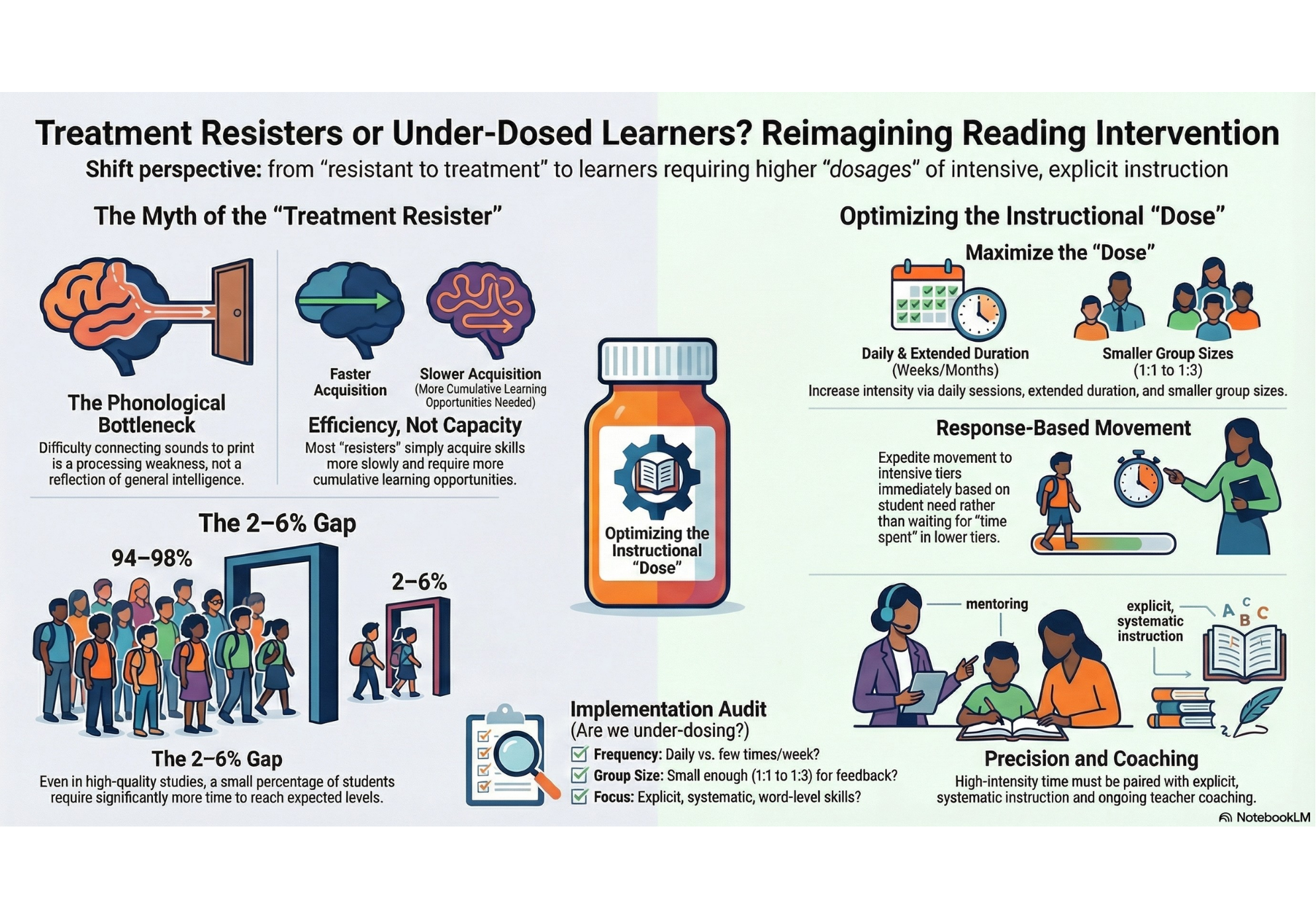
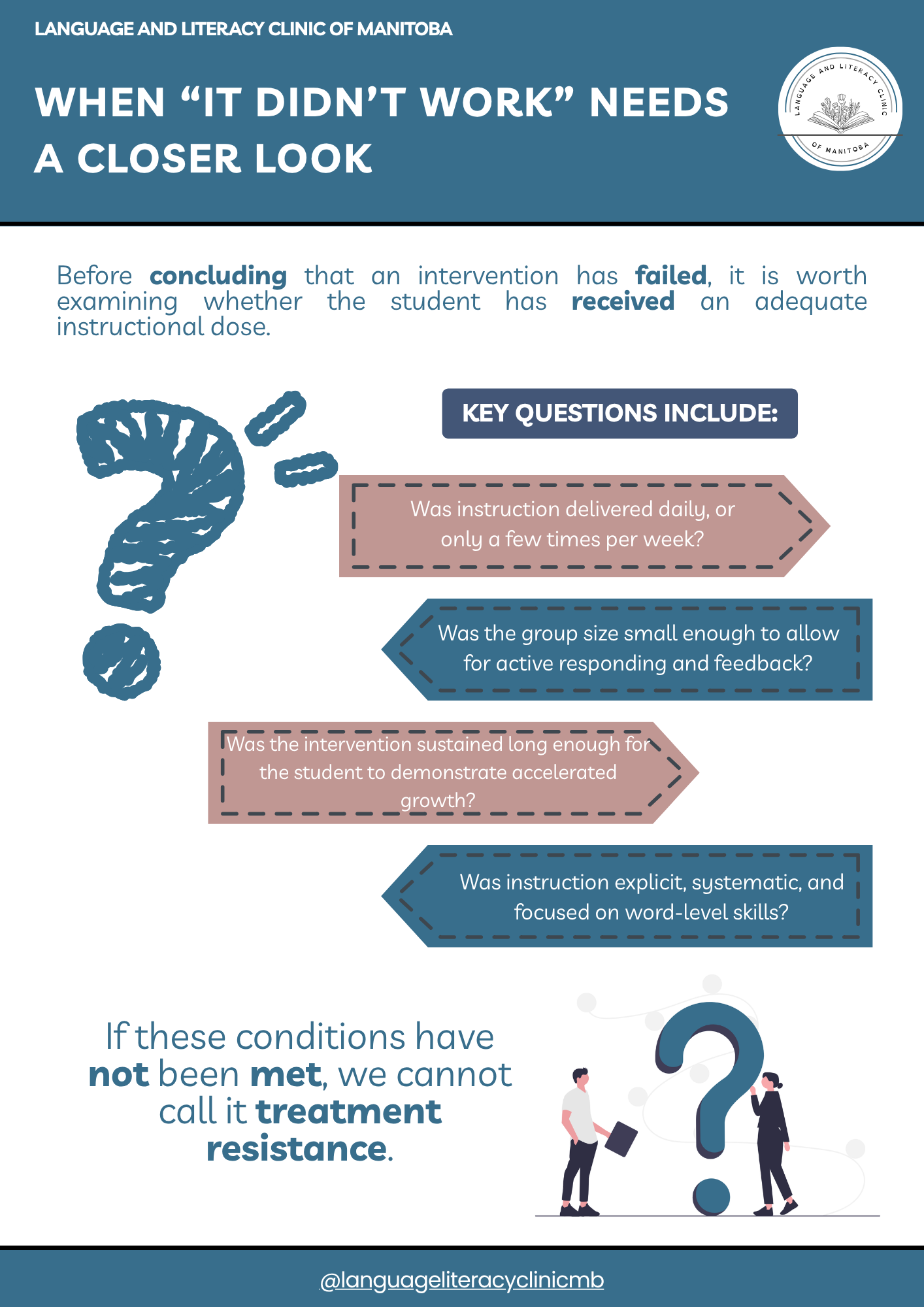
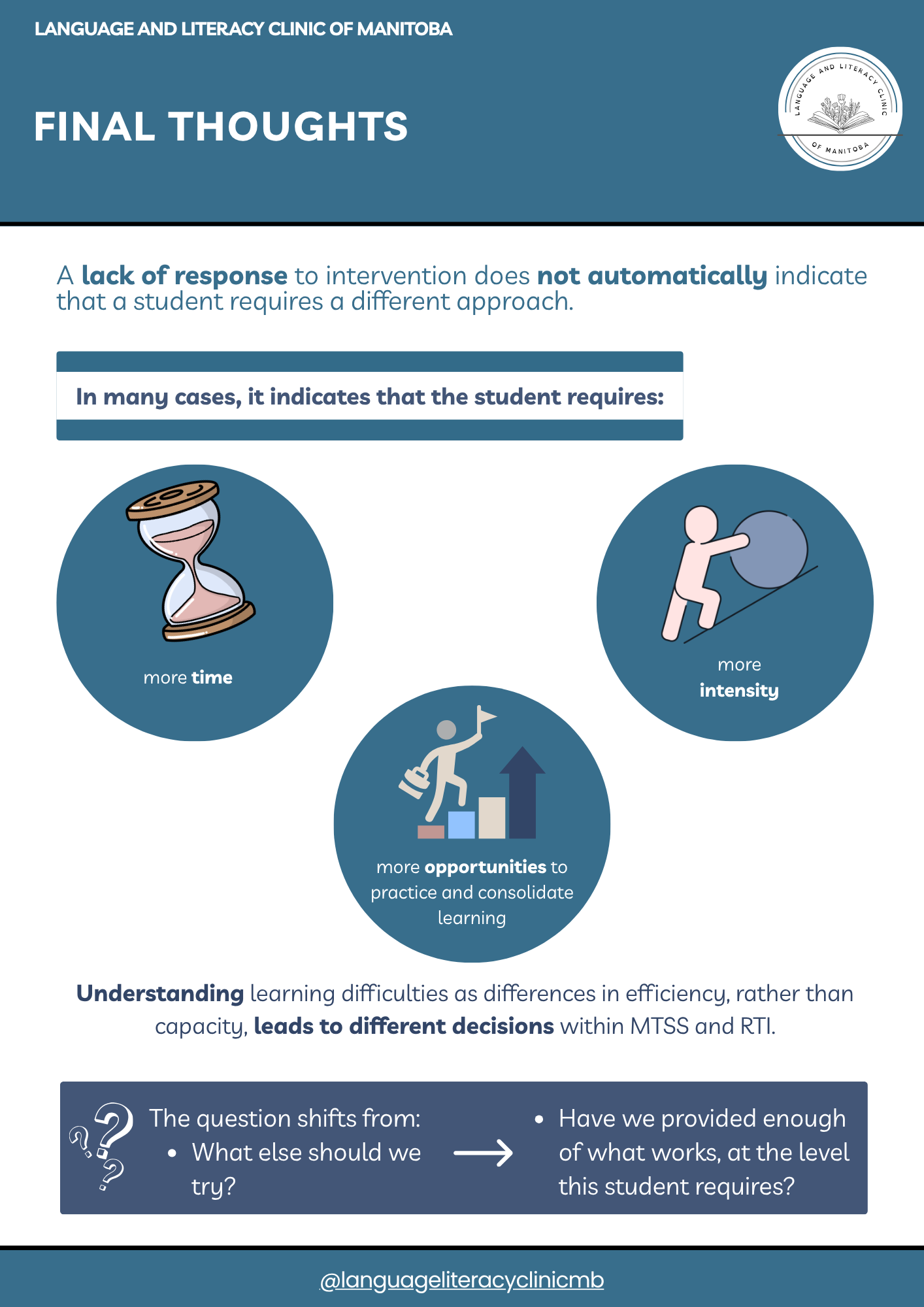
In many cases, the issue is not that the intervention was ineffective. The issue is that the student has not yet received enough of the right kind of instruction, delivered with sufficient intensity over time.
This distinction changes how teams make decisions within MTSS and RTI, and it has direct implications for how support is planned at the classroom and intervention levels.
Learning Efficiency and Word-Level Reading
Reading development depends heavily on the ability to accurately and efficiently identify words. This includes both phonetic decoding and automatic word recognition (Torgesen, 2000).
Students with reading difficulties frequently experience a bottleneck in this area. They have difficulty:
connecting sounds to print
applying phonetic decoding strategies
building a large bank of automatically recognized words
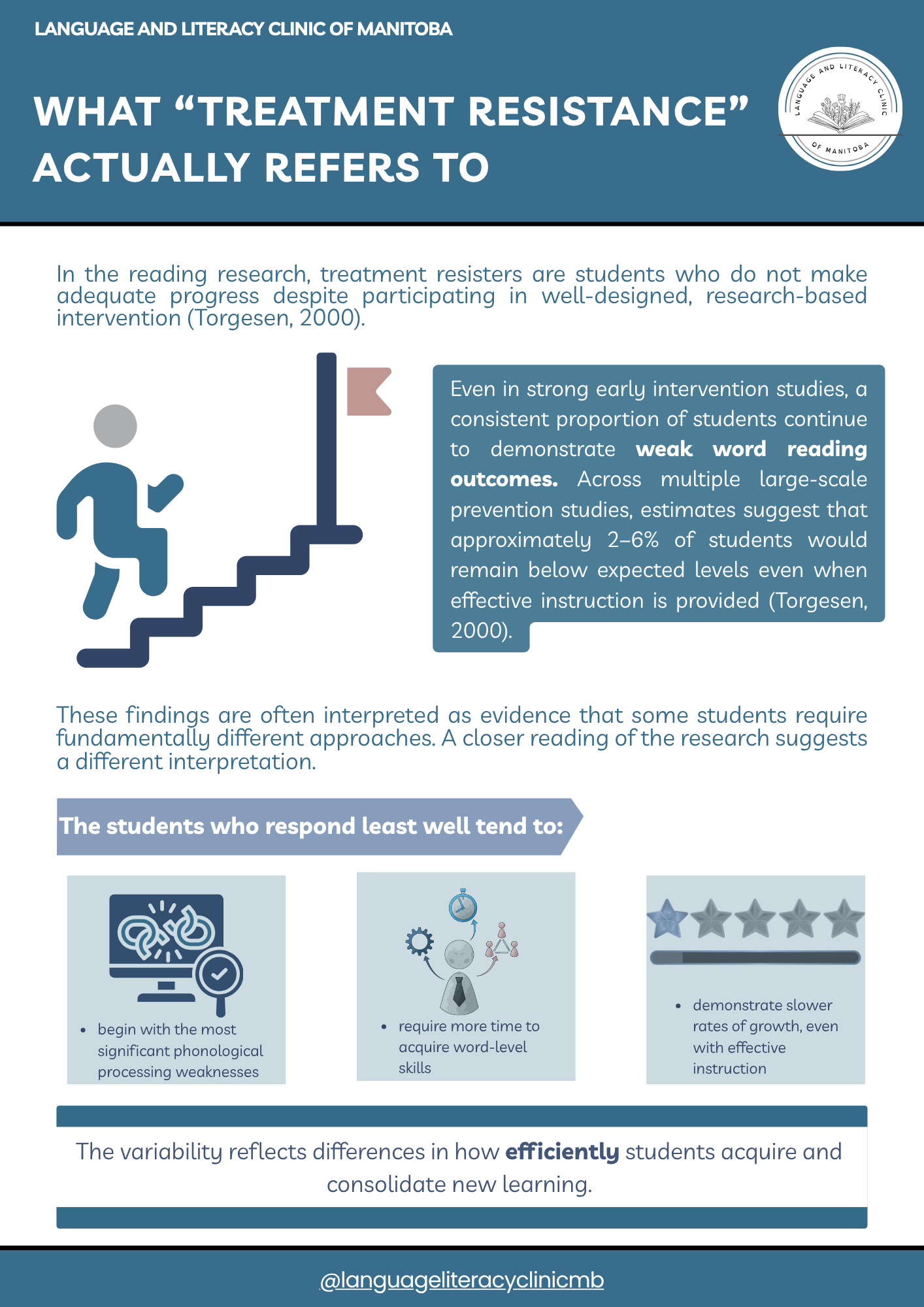
These challenges are strongly associated with weaknesses in accurately processing the sounds of the language, not general intelligence (Torgesen, 2000). When phonological skills are accounted for, general verbal ability does not independently predict growth in word reading.
From an instructional perspective, this means that many students identified with reading difficulties are not lacking the capacity to learn. They are acquiring skills more slowly and require more explicit instruction, more practice, and more cumulative learning opportunities.
This is where the concept of dose becomes central.
MTSS/RTI and the Question of Timing
MTSS and RTI frameworks are intended to match the level of support to student need. In practice, intervention often progresses in a stepwise fashion, with students moving through tiers of increasing intensity.
Some students with significant reading difficulties require immediate access to more intensive intervention, rather than extended time in lower-intensity supports (Vaughn et al., 2010). In other words, we do not want to delay movement through the tiers, which can contribute to ongoing gaps in word reading development. Instead, sometimes we need to expedite this movement so a student can access the intensity their brain needs.
Torgesen (2000) also emphasizes that once students fall behind in early word-level skills, remediation becomes more difficult and often requires substantially more intensive instruction to achieve adequate outcomes.
The implication is straightforward:
Decisions about intervention should be based on response and need, not on time spent in a given tier.
Implications for Practice
Several consistent themes emerge across the research.
First, instruction in word-level reading skills must be explicit and systematic. Interventions that emphasize phonetic decoding produce stronger outcomes than those that rely on context or implicit learning (Torgesen, 2000).
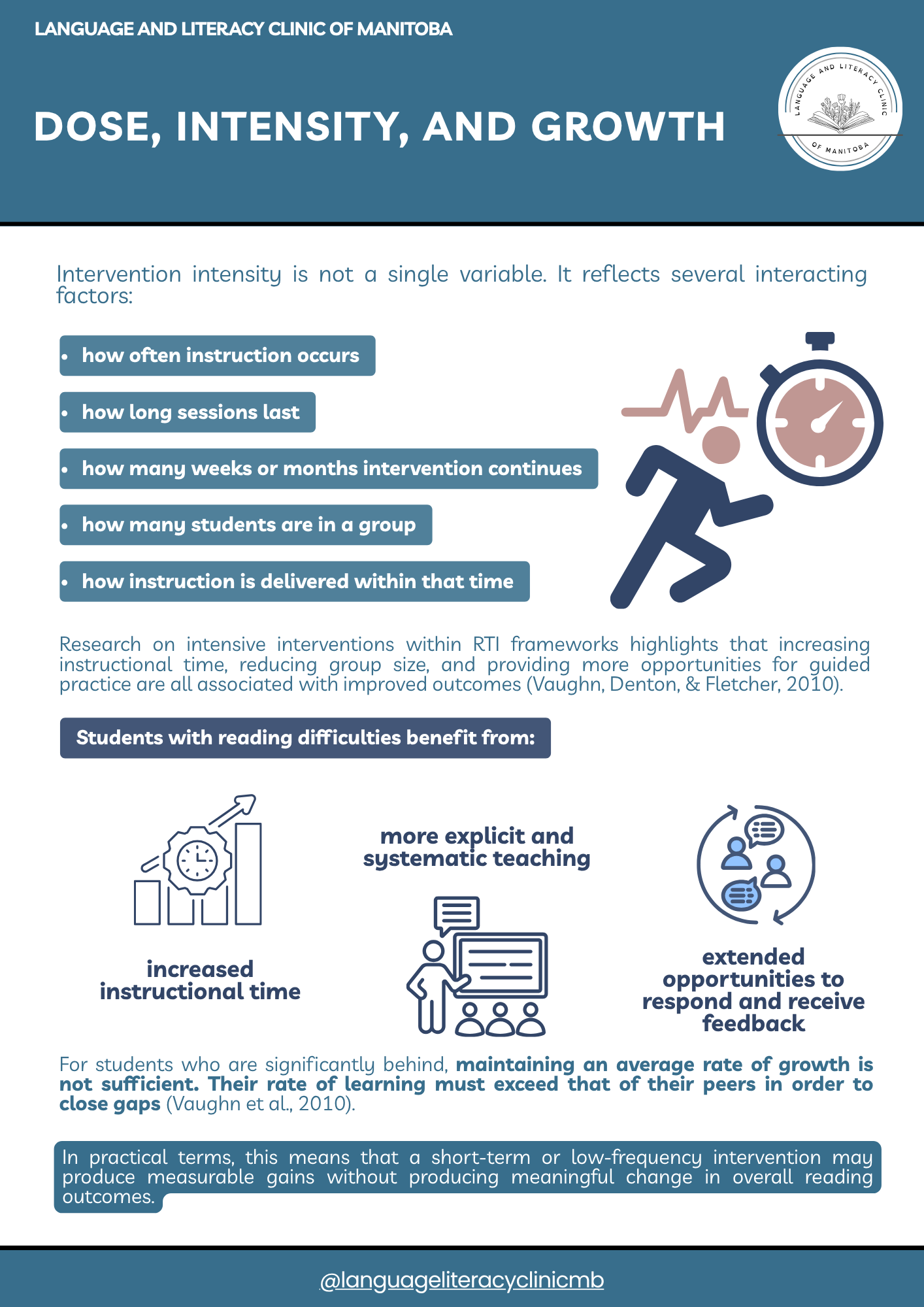
Second, intensity must be sufficient to accelerate learning, not simply support it. This often requires:
daily intervention
small group sizes (often 1:1 to 1:3)
extended duration over weeks or months
Third, some students require multi-year support. Early gains do not guarantee continued progress without ongoing instruction (Torgesen, 2000).
Finally, instructional quality interacts with intensity. Increasing time without improving the precision and responsiveness of instruction is unlikely to produce the desired outcomes (Vaughn et al., 2010).
Why Ongoing Coaching Matters
Improving outcomes for students with reading difficulties requires more than selecting a program or increasing minutes on a schedule.
It requires changes in instructional practice.
One-time professional development is not designed to support that level of change. Educators need:
opportunities to apply new learning in real classrooms
feedback on instruction
support in adjusting pacing, grouping, and task demands
time to refine practice based on student response
Ongoing coaching provides the structure for this work. It allows teams to increase both the quality and the intensity of instruction, which is necessary to improve outcomes for students who are learning less efficiently.
If You’re Looking to Strengthen Implementation
If your school or division is working to:
refine MTSS/RTI systems
increase the impact of intervention
build educator capacity in structured literacy
we support teams through ongoing, job-embedded coaching focused on implementation.
👉 Explore how we can work together
___________________________________________________________________________________________________________________________________________
References (APA 7th)
Austin, C. R., Vaughn, S., & McClelland, A. M. (2017). Intensive Reading Interventions for Inadequate Responders in Grades K–3: A Synthesis. Learning Disability Quarterly, 40(4), 191–210. https://doi.org/10.1177/0731948717714446
Denton, C. A., Fletcher, J. M., Anthony, J. L., & Francis, D. J. (2006). An Evaluation of Intensive Intervention for Students with Persistent Reading Difficulties. Journal of Learning Disabilities, 39(5), 447–466. https://doi.org/10.1177/00222194060390050601
Torgesen, J. K. (2000). Individual differences in response to early interventions in reading: The lingering problem of treatment resisters. Learning Disabilities Research & Practice, 15(1), 55–64.
Vaughn, S., Denton, C. A., & Fletcher, J. M. (2010). Why intensive interventions are necessary for students with severe reading difficulties. Psychology in the Schools, 47(5), 432–444.