- Jan 30
What Does a Structured Literacy Lesson Actually Look Like?
- Britney | Language and Literacy Clinic of Manitoba
- 0 comments
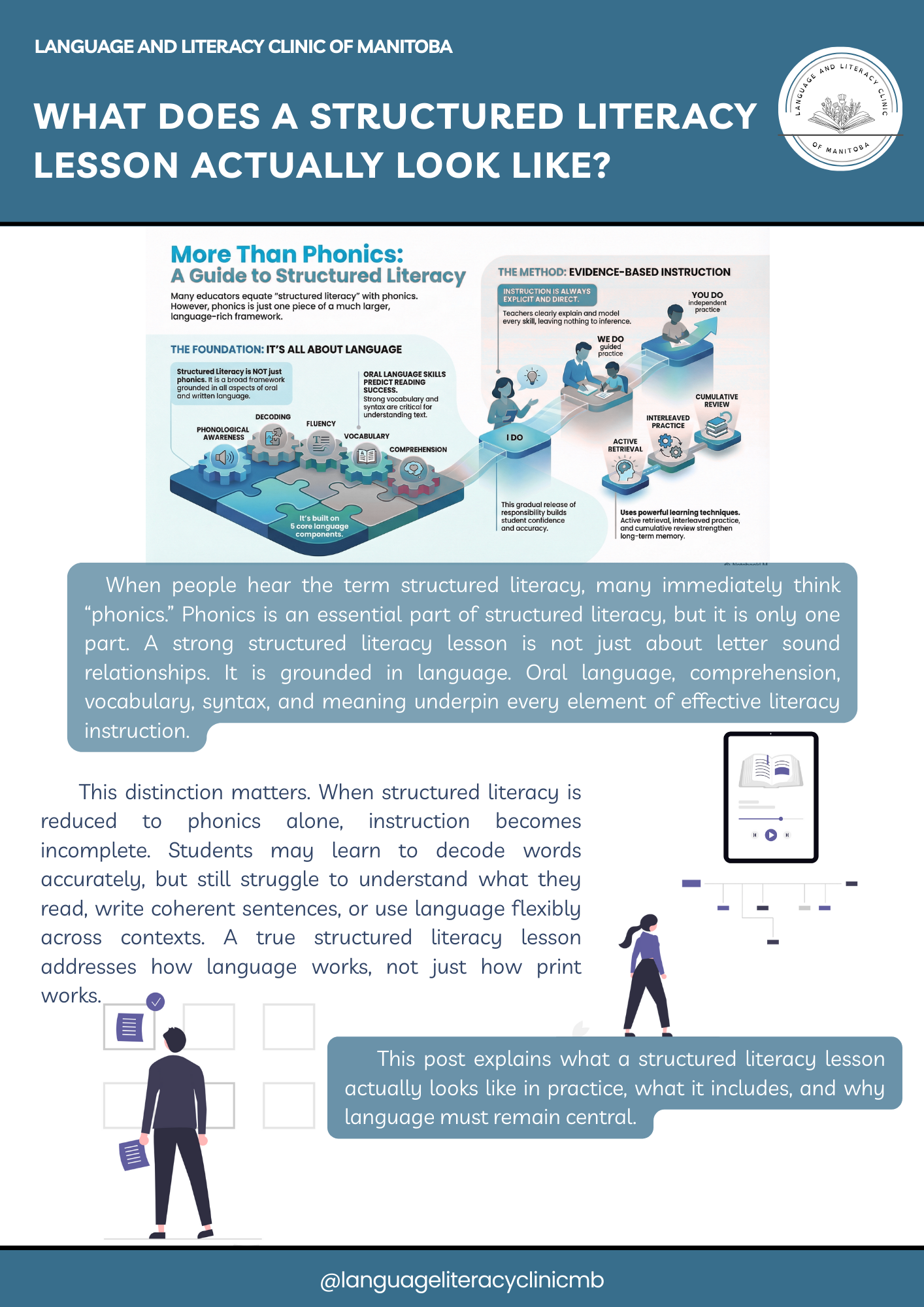
Language Is the Foundation
Structured literacy is often described using five core components: phonological awareness, decoding, fluency, vocabulary, and comprehension. These components are interconnected and all depend on language development.
Phonological awareness is an oral language skill. Vocabulary and syntax shape comprehension. Even decoding relies on language knowledge, such as understanding that words carry meaning and that sentence structure matters.
Research consistently shows that oral language skills are a strong predictor of later reading comprehension (Snow, 2016; Nation, 2019). Students with weak vocabulary or syntactic knowledge may decode accurately but fail to understand what they read. This is why structured literacy must be language-rich.
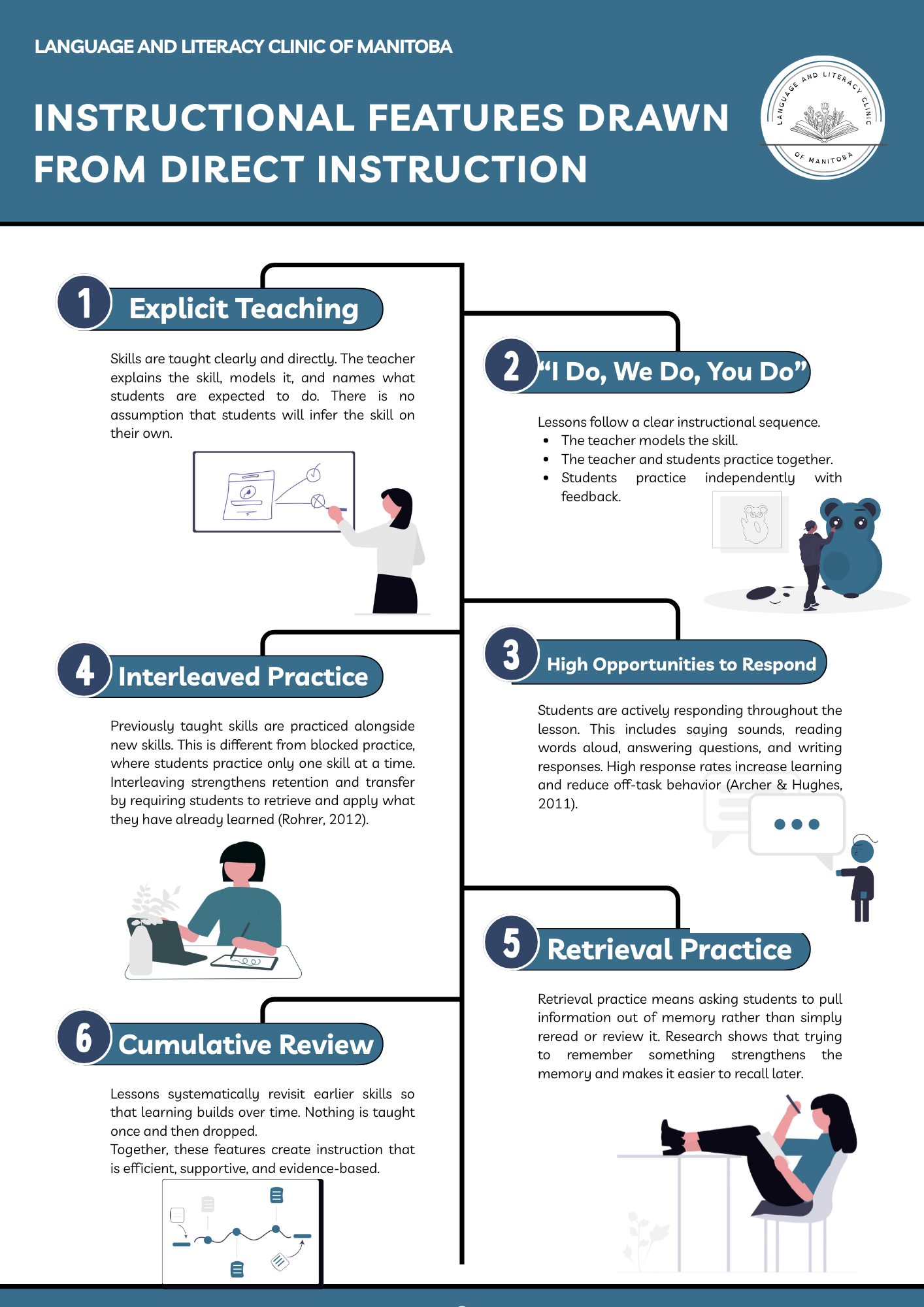
What This Looks Like in a Real Lesson
Through our consulting, we teach structured literacy using explicit, language-based lesson designs that ensure all required components are addressed over time. One example is our two-day structured decoding lesson plan for early readers.
Structured Literacy Lesson Plan
A key element of structured literacy is ensuring that all components are covered. This lesson plan provides all elements of a decoding lesson. It can be used to pre-plan lessons, and to “check off” components as they are completed. Across two days, the lesson includes:
Phonemic awareness activities such as blending and segmenting
Explicit phonics instruction and review
Word mapping that connects sounds, letters, and meaning
Repeated reading and spelling for retrieval practice
Sentence-level dictation to support syntax and meaning
Decodable text reading to apply skills in connected text
Importantly, language is addressed throughout. Words are discussed for meaning. Sentences are read and written, not just decoded. Students are asked to say, hear, read, and write language in multiple ways.
This approach reflects how we train educators and support schools. Structured literacy is a coherent system delivered intentionally over time.
Click here to download the full lesson plan to see how this looks in practice. We encourage educators to examine not just the activities, but the instructional sequence and language focus.
Take the next step — click here to visit our Work With Us page
Check out our recent posts on Instagram
References
Archer, A. L., & Hughes, C. A. (2011). Explicit instruction: Effective and efficient teaching. Guilford Press.
Dunlosky, J., Rawson, K. A., Marsh, E. J., Nathan, M. J., & Willingham, D. T. (2013). Improving Students' Learning With Effective Learning Techniques: Promising Directions From Cognitive and Educational Psychology. Psychological science in the public interest : a journal of the American Psychological Society, 14(1), 4–58. https://doi.org/10.1177/1529100612453266
International Dyslexia Association. (2019). Structured literacy: Effective instruction for students with dyslexia and related reading difficulties. https://dyslexiaida.org
Denton, C. A., Fletcher, J. M., Taylor, W. P., Barth, A. E., & Vaughn, S. (2014). An experimental evaluation of Guided Reading and explicit interventions for primary-grade students at-risk for reading difficulties. Journal of Research on Educational Effectiveness, 7(3), 268–293.
Nation, K. (2019). Children’s reading difficulties, language, and reflections on the simple view of reading. Australian Journal of Learning Difficulties, 24(1), 47–73. https://doi.org/10.1080/19404158.2019.1609272
Rohrer, D. (2012). Interleaving helps students distinguish among similar concepts. Educational Psychology Review, 24(3), 355–367. https://doi.org/10.1007/s10648-012-9201-3
Snow, C. E. (2016). Reading for understanding: Toward an R&D program in reading comprehension. RAND Corporation.
Snow, Catherine. (2002). Reading for Understanding: Toward an R&D Program in Reading Comprehension. https://www.videnomlaesning.dk/media/2526/reading-for-understanding.pdf
Agarwal, P. K., Nunes, L. D., & Blunt, J. R. (2021). Retrieval Practice Consistently Benefits Student Learning: A Systematic Review of Applied Research in Schools and Classrooms. Educational Psychology Review, 33(4), 1409–1453. https://doi.org/10.1007/s10648-021-09595-9